145 Nutt Road, Phoenixville, PA 19460
A dental professional assisting a patient during a dental appointment.

Our Dental Services

Cosmetic Dentistry

The image displays a collage of dental implants with varying stages of completion, showcasing different types of crowns and implant pieces against a black background.

Zirconia Crowns

What is a zirconia dental crown? Zirconia dental crowns are made from zirconium dioxide, a white powdered ceramic material. Its ceramic properties and the fact that is milled from a single block make it a strong dental prosthetic. In fact, its strength allows for far thinner dental crowns than those made with metals.

Clear Aligners

Clear Aligners - These clear aligners correct malocclusion, a growing number of patients and doctors prefer these over traditional wires and brackets, due to advantages such as:

  • Nearly-invisible appliances
  • No dietary restrictions
  • No obstructions to flossing or brushing
  • Controlled single-tooth movement
  • Remote monitoring options

Our offices uses ClearCorrect, SureSmile and Spark Aligners.
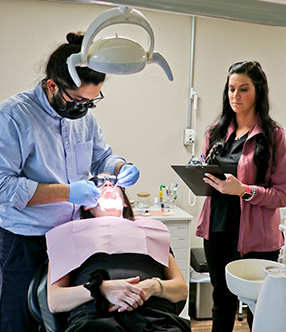
The image depicts a dental office setting where a dentist is performing oral care on a patient with the assistance of a dental hygienist, who is using a dental drill.

Cleanings and Periodontal Treatment

All patients should have a standard cleaning at least twice a year. A child should have a cleaning and fluoride treatment twice a year. A cleaning on an adult might include prophylaxis (basic cleaning), and/or a periodontal scaling and root planing.

Sometimes it is necessary to extract a tooth. This can happen for a variety of reasons. Extractions are commonly performed in cases where a deciduous “baby” tooth is reluctant to fall out, a severely broken down and non-restorable tooth is present, or “wisdom tooth” is poorly positioned and unable to fully erupt into place.

To reduce any anxiety and insure patient comfort whenever a tooth extraction is necessary, the procedure, the post surgical instructions, as well as any restorative follow-up care will be carefully and completely explained.

Fillings: Resin

We use tooth-colored resin fillings that are cured to match your teeth.

Pediatric Dental Care

Dr. Nur also specializes in treating infants, children and teens in a warm and friendly office setting. We take pride in creating and maintaining beautiful and healthy smiles for our younger patients in an environment that is lighthearted and fun. We focus on establishing oral health habits that last a lifetime, with education and prevention as our primary tools.

Teeth Whitening

Whitening procedures have effectively restored the smile of people with stained, dull, or discolored teeth. The darker tissue of your teeth, the dentin, can become exposed as the outer layer of enamel is worn away by the effects of aging or things like caffeine and tobacco. We offer a simple and effective take-home whitening system that will create a dazzling smile.

Removable Dental Prostheses (Dentures)

For patients who are missing multiple teeth, we can fabricate full dentures or partial dentures. We also offer flexible dentures which contain no metal and provide a better aesthetic option for our patients.

Clear Frame Partial Dentures

Clear frame partials have become very popular.
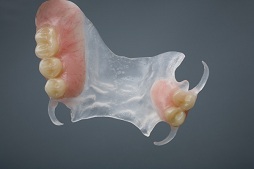
The image shows a transparent 3D model of a human mouth with teeth and gums, placed against a dark background.

Benefits of a Flexible Partial:

  • No metal clasping
  • Clear or tissue colored clasp that virtually disappear in the mouth
  • More stain resistant then other materials
  • Comfort: Thin, lightweight, and flex for easy insertion
  • Strength: Clinically unbreakable, Will not warp or become brittle
  • Can be used in conjunction with metal frameworks

Dental Extraction

dental extraction is the removal of a tooth from your mouth. Dentists recommend removing a tooth only when it cannot be saved or when taking it out is the best option for your overall oral health.

Common reasons a tooth may need to be extracted include:

  • Severe decay that cannot be repaired with a filling or crown.
  • A broken tooth that cannot be restored.
  • Advanced gum disease that has loosened the tooth.
  • An infected tooth that cannot be successfully treated.
  • Impacted or problematic wisdom teeth.
  • Making room for orthodontic treatment (braces or aligners).
What happens during an extraction?
  1. The area is numbed.
    Your dentist will give you local anesthetic so you won’t feel pain during the procedure. You may feel pressure, but you should not feel sharp pain.
  2. The tooth is loosened.
    The dentist gently rocks the tooth back and forth to loosen it from the surrounding bone and ligaments.
  3. The tooth is removed.
    Once it’s loose enough, the tooth is carefully lifted out.
  4. The area is cleaned.
    If needed, the dentist cleans the socket. Sometimes a few stitches are placed to help the area heal.
  5. A gauze pad is placed.
    You’ll bite on gauze for about 30–60 minutes to help a blood clot form. This clot is very important because it protects the bone and nerves while the area heals.
Loesberg Dental and Associates
What can you expect afterward?

It’s normal to have:

  • Mild bleeding for a few hours.
  • Swelling for 1–3 days.
  • Some soreness or tenderness.

Most people return to their normal routine within a day or two after a simple extraction.

How do you care for the area?

For the first 24 hours:

  • Bite on the gauze as instructed.
  • Avoid drinking through a straw.
  • Don’t smoke or vape.
  • Eat soft foods like yogurt, applesauce, mashed potatoes, or soup (once it has cooled).
  • Gently brush your other teeth, but avoid the extraction site.

After the first day, your dentist may recommend gently rinsing with warm salt water to keep the area clean.

Will I need to replace the tooth?

If the extracted tooth isn’t a wisdom tooth, your dentist may recommend replacing it with a dental implant, bridge, or partial denture. Replacing a missing tooth can help keep your other teeth from shifting and maintain your ability to chew comfortably.

In simple terms, a dental extraction is the careful removal of a tooth that can no longer be saved or is causing problems. The procedure is done with the area completely numb, and most patients are surprised that they feel pressure rather than pain. Proper aftercare helps the area heal quickly and comfortably.

Loesberg Dental and Associates

Dental Implant

dental implant is an artificial tooth root that replaces the root of a missing tooth. It is a small titanium post that is gently placed into your jawbone where the missing tooth used to be. Titanium is a very safe, biocompatible metal that allows the bone to grow around it, making it strong and stable.

Once the implant has healed and fused with the bone (usually over a few months), a small connector called an abutment is attached. A custom-made crown (the part that looks like a natural tooth) is then secured to the abutment.

Think of it like this:

  • The implant is the foundation (similar to the roots of a tree).
  • The abutment is the connector that joins everything together.
  • The crown is the visible tooth that you use to smile and chew.
Why choose a dental implant?
  • It looks and feels like a natural tooth.
  • It allows you to chew comfortably.
  • It does not rely on neighboring teeth for support, unlike a bridge.
  • It helps prevent the jawbone from shrinking after a tooth is lost.
  • With good home care and regular dental visits, implants can last for many years.
Loesberg Dental and Associates
Does getting an implant hurt?

Most patients are pleasantly surprised by how comfortable the procedure is. The area is numbed with local anesthetic, so you should only feel pressure—not pain. Mild soreness afterward is common and is usually managed with over-the-counter pain medication.

Who is a good candidate?

Most healthy adults with adequate jawbone and healthy gums are candidates for dental implants. Your dentist will perform an exam and take X-rays or a 3D scan to determine if an implant is the right option for you.

In simple terms, a dental implant is the closest replacement to a natural tooth because it replaces both the root and the visible tooth, helping you eat, speak, and smile with confidence.

The image shows a motivational text overlay on a background with a blurred photo of a person smiling at the camera, conveying a positive message about happiness and smiles.

About Us

Our goal is to help every patient experience the benefits of good oral health and a beautiful smile. We value the trust you have placed in our office and strive to provide solutions that meet your dental needs and expectations of care.

Questions?